


The U.S. housing market is entering the second quarter with mounting signs of fatigue, as affordability pressures intensify and sellers begin to lose leverage. Data released by Cotality point to a market that is no longer surging–but not yet correcting–caught between elevated home values and rising ownership costs.
While prices remain far above pre-pandemic levels, the pace of growth has slowed to a near standstill. At the same time, higher insurance premiums, property taxes, and mortgage frictions are reshaping both buyer and investor behavior. Below are the 10 key developments, compiled by Cotality, defining the U.S. housing market in April 2026.
1. Price growth is effectively flat – After months of modest declines, home prices are stabilizing. February posted a marginal 0.04% gain, with early March data pointing to a 0.34% increase. The shift suggests a market searching for equilibrium rather than accelerating in either direction.
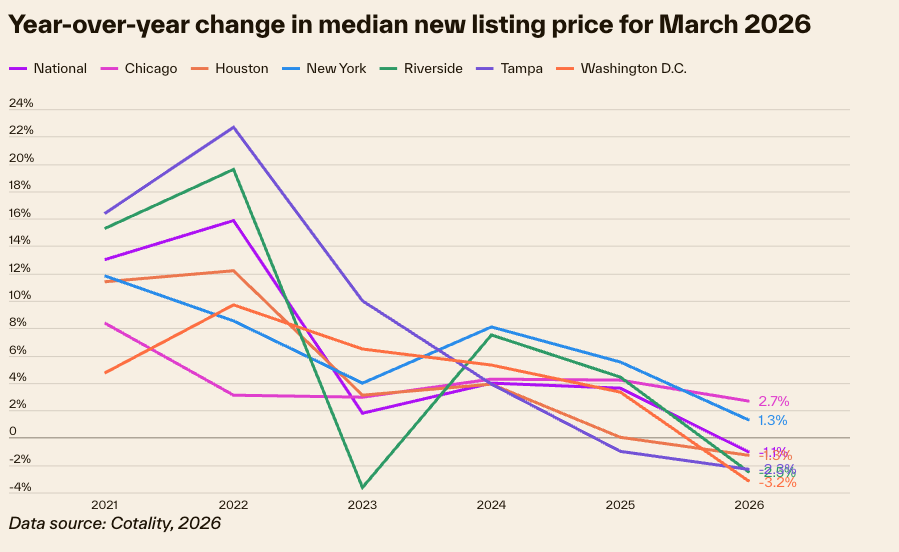
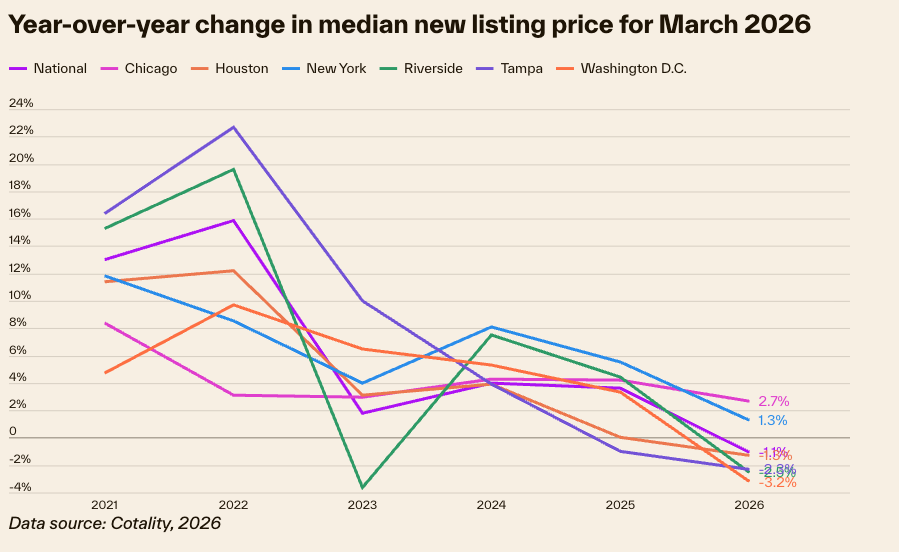
2. Sellers are cutting prices – Listings are coming to market at lower price points, down 1.1% year-over-year. That signals weakening seller power after years of dominance, particularly as buyers push back against affordability constraints.
3. Prices remain historically elevated – Despite the slowdown, U.S. home prices are still roughly 48% higher than pre-pandemic levels–keeping ownership out of reach for many first-time buyers and locking in affordability stress.
4. Regional divergence is widening – Lower-cost markets continue to outperform. Cities like Knoxville and Camden have seen price gains above 80% since 2020, while major coastal metros–including San Francisco and Washington–have lagged with sub-25% increases.
5. California inventory is tightening – New listings across California fell 10% year-over-year in the first quarter, with inventory down 11%. Major metros such as San Diego and San Francisco recorded double-digit declines in listings, underscoring persistent supply constraints.
6. Home equity is high–but largely untapped – Homeowners are sitting on record levels of equity, yet access remains limited. California alone holds about a quarter of U.S. tappable equity but accounts for only about 12% of active HELOC balances–highlighting a disconnect between wealth and liquidity.
7. Rent growth is cooling – The rental market is softening, with single-family rents rising just 1.1% year-over-year. Higher-end rentals are proving more resilient, while some markets–including Los Angeles–are beginning to post annual declines, signaling normalization after prior spikes.
8. Escrow costs are driving payment shocks – Rising insurance and property taxes are pushing monthly housing costs higher. About 65% of homeowners are expected to face escrow shortages in 2026, with average monthly payments increasing by roughly $175. States like Florida and Colorado are seeing some of the sharpest increases.
9. Institutional investors are stepping back – Investor purchases accounted for 27% of single-family home sales in March, down slightly from a year earlier. Notably, large-scale investors–those with portfolios exceeding 1,000 homes–have cut their market share in half, suggesting caution amid potential regulatory changes.
10. Mortgage market stress is rising – Serious delinquencies are ticking higher, reaching 1.14% in February. Loans backed by the Federal Housing Administration show the greatest strain, with delinquency rates climbing sharply year-over-year, even as conventional loans remain relatively stable.
Bottom line
The U.S. housing market is no longer overheating–but it isn’t easing meaningfully either. Elevated prices, rising ownership costs, and shifting investor dynamics are combining to create a prolonged affordability squeeze, leaving the market in a slow-moving recalibration rather than a sharp correction.

 English