


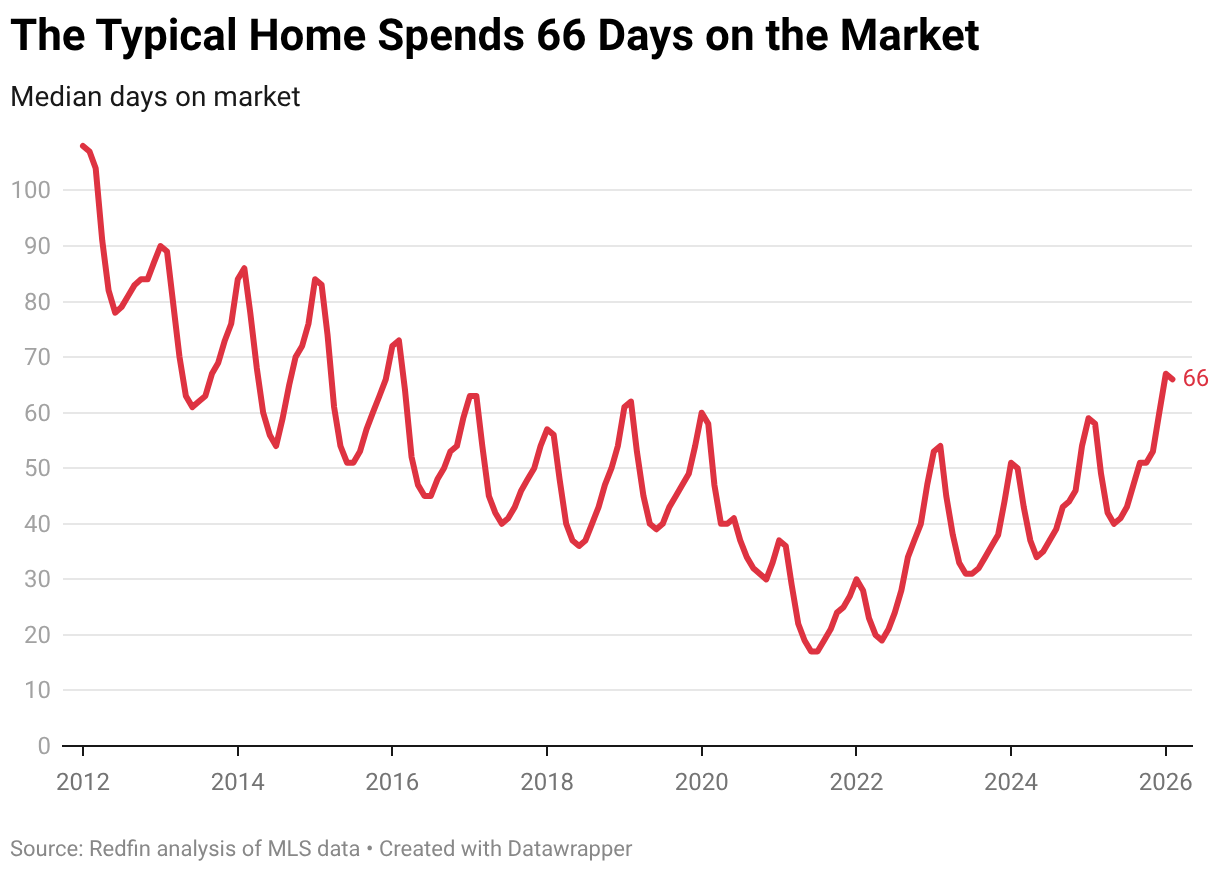
U.S. homebuyers are approaching the spring selling season with uncommon caution, as elevated borrowing costs and shifting macro conditions disrupt what is typically the housing market’s most active period.
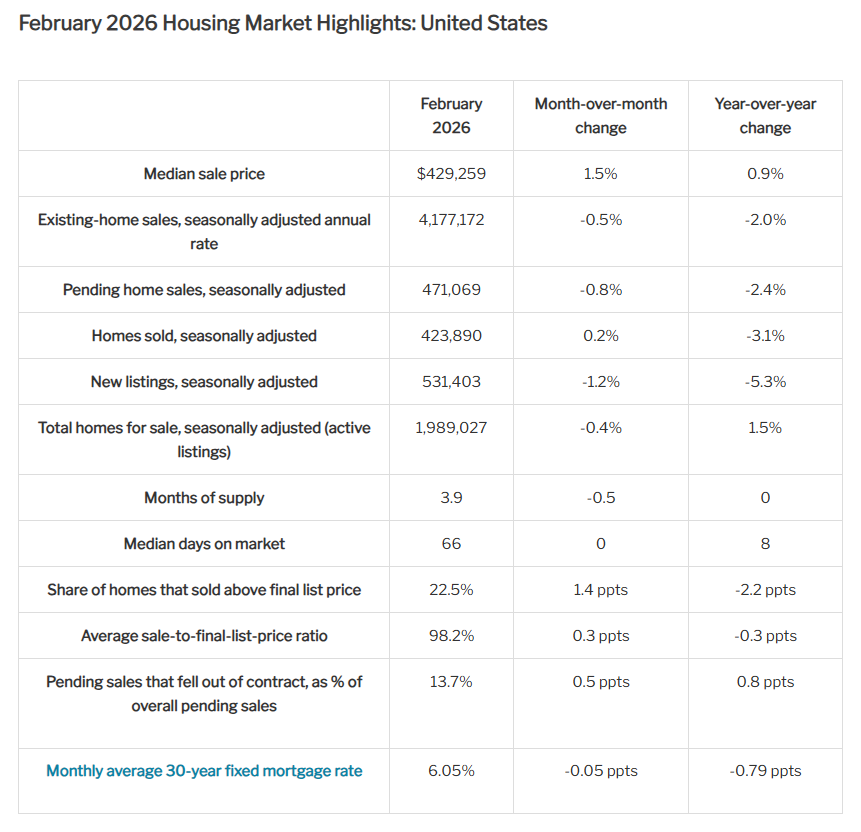
Homes that went under contract in February 2026 spent a median 66 days on the market, according to a report from Redfin — the slowest February pace in a decade and up sharply from 58 days a year earlier. The data points to a market where demand remains restrained, even as conditions increasingly favor buyers.
Mortgage rates briefly dipped below 6% in early 2026, offering a short-lived improvement in affordability and prompting some borrowers to lock in rates in the mid-5% range. That momentum quickly faded as rates reversed course, reinforcing a pattern of hesitancy among prospective buyers who have grown sensitive to even small shifts in financing costs.
At the same time, supply-demand dynamics have tilted decisively. Sellers outnumber buyers by more than 40%, creating one of the most buyer-friendly negotiating environments in recent years. That imbalance is showing up in transaction pricing: the typical home sold for 1.8% below its final list price in February, the largest seasonal discount since 2023.
Price appreciation, while still positive, continues to moderate. The median U.S. home sale price rose 0.9% from a year earlier to $429,259–marking a sharp departure from the double-digit gains seen during the pandemic-era housing boom.
Transaction activity also softened across the board. Pending home sales declined 0.8% month over month on a seasonally adjusted basis, while new listings slipped 1.2%, suggesting both buyers and sellers remained on the sidelines heading into the spring season.
Early indications in March suggest a potential shift in seller behavior. Listing activity has begun to edge higher, with some homeowners who withdrew properties in 2025 preparing to relaunch listings in anticipation of seasonal demand.
Notably, the February data largely captures market conditions before the outbreak of the Iran war on Feb. 28, when U.S. and Israeli strikes triggered a broader regional war. The subsequent escalation–combined with a sharp rise in mortgage rates through March–has further tightened affordability and threatens to deepen the slowdown, raising the risk that the spring housing market could prove more subdued than initially expected.

 English